There are places we admire, and there are places that enter us. Tuscany did that for me.
I had seen the familiar images before I went: hills folded into one another, roads traced by cypress trees, vineyards glowing in the afternoon sun, and medieval towns resting high above the valleys. Yet being there was entirely different. The landscape was not simply beautiful. It had a presence—soft, ancient, and deeply calming.
Driving through the countryside, I kept wanting to stop. Around every curve there seemed to be another view: silver-green olive trees, a stone farmhouse, rows of vines, or a town rising from the hill as though it had grown from the earth itself. Tuscany made me slow down without asking me to. I loved it almost immediately.

A landscape shaped by centuries
Part of Tuscany’s fascination is that its beauty is inseparable from its history. Long before Italy became a unified country, this land was home to the Etruscans, whose civilization flourished in central Italy centuries before Rome became an empire. Their traces remain in ancient walls, tombs, artifacts, and the hilltop locations of many Tuscan towns.
The Romans followed, building roads and settlements and cultivating the countryside. After the fall of the Roman Empire, fortified towns grew on defensible hilltops. During the Middle Ages, cities such as Florence, Siena, Pisa, and Lucca became powerful, independent city-states—centers of commerce and culture, but also fierce rivals.
You can still feel that history in the architecture. Narrow streets open into graceful piazzas. Bell towers rise above tightly gathered roofs. Thick stone walls remind us that these lovely towns were once places of protection, conflict, faith, and daily survival.

Where the Renaissance changed the world
Tuscany’s most extraordinary chapter came during the Renaissance. In Florence, wealth from banking and trade helped create an environment in which art, architecture, science, and humanist thought could flourish. Under the patronage of the Medici family, artists including Botticelli, Michelangelo, and Leonardo da Vinci produced work that changed the way people saw both humanity and the world.
The Renaissance was not only about beautiful paintings. It reflected a renewed curiosity about human potential, classical learning, proportion, nature, and the life of the mind. Brunelleschi’s dome over Florence Cathedral became a triumph of imagination and engineering. The design of Pienza transformed a small town into an influential expression of Renaissance urban ideals.
Knowing even a little of this history changes the experience of walking through Tuscany. The old buildings stop feeling like a picturesque background. They become witnesses. People have stood in these streets for hundreds of years—working, arguing, creating, celebrating, and looking toward many of the same hills.
Tuscany does not separate beauty from age. It shows us how time can deepen beauty.
The pleasure of simple things
What I remember most, however, is not a list of monuments. I remember the feeling of the days.
I remember the warm color of the stone, the changing sky, flowers spilling from terracotta pots, and the pleasure of discovering another view at the end of a street. I remember how natural it felt to sit longer over a meal and how satisfying simple food could be when it belonged to the place.
Tuscan cooking grew from a tradition often called cucina povera—resourceful country cooking that respected humble ingredients and wasted very little. Bread, beans, seasonal vegetables, local cheese, olive oil, herbs, and meat were prepared without unnecessary complication. The result is food that feels honest and generous.
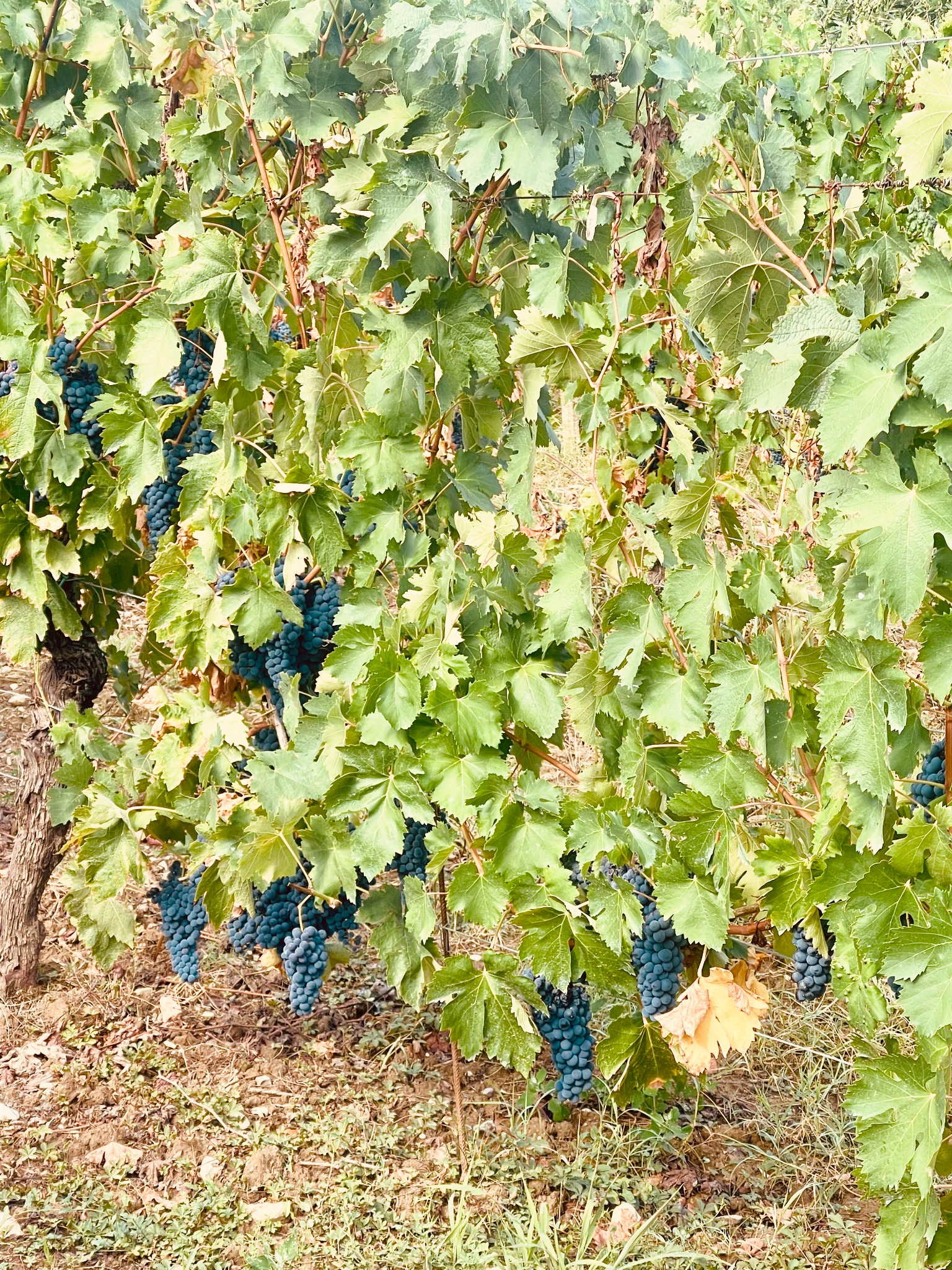
The vineyards tell their own history. Grapes have been cultivated in this region since ancient times, while wines such as Brunello di Montalcino emerged in their modern form much later. Brunello’s story took shape in the nineteenth century, when local growers developed an age-worthy wine from Sangiovese. Standing near heavy clusters of grapes, I felt again how deeply Tuscan life is connected to patience: vines grow by season, wine matures in time, and the table is not meant to be hurried.
Why Tuscany felt like renewal
Travel does not magically remove our responsibilities. But it can interrupt the pace that has begun to feel normal. It can remind us that a day is not only a container for tasks.
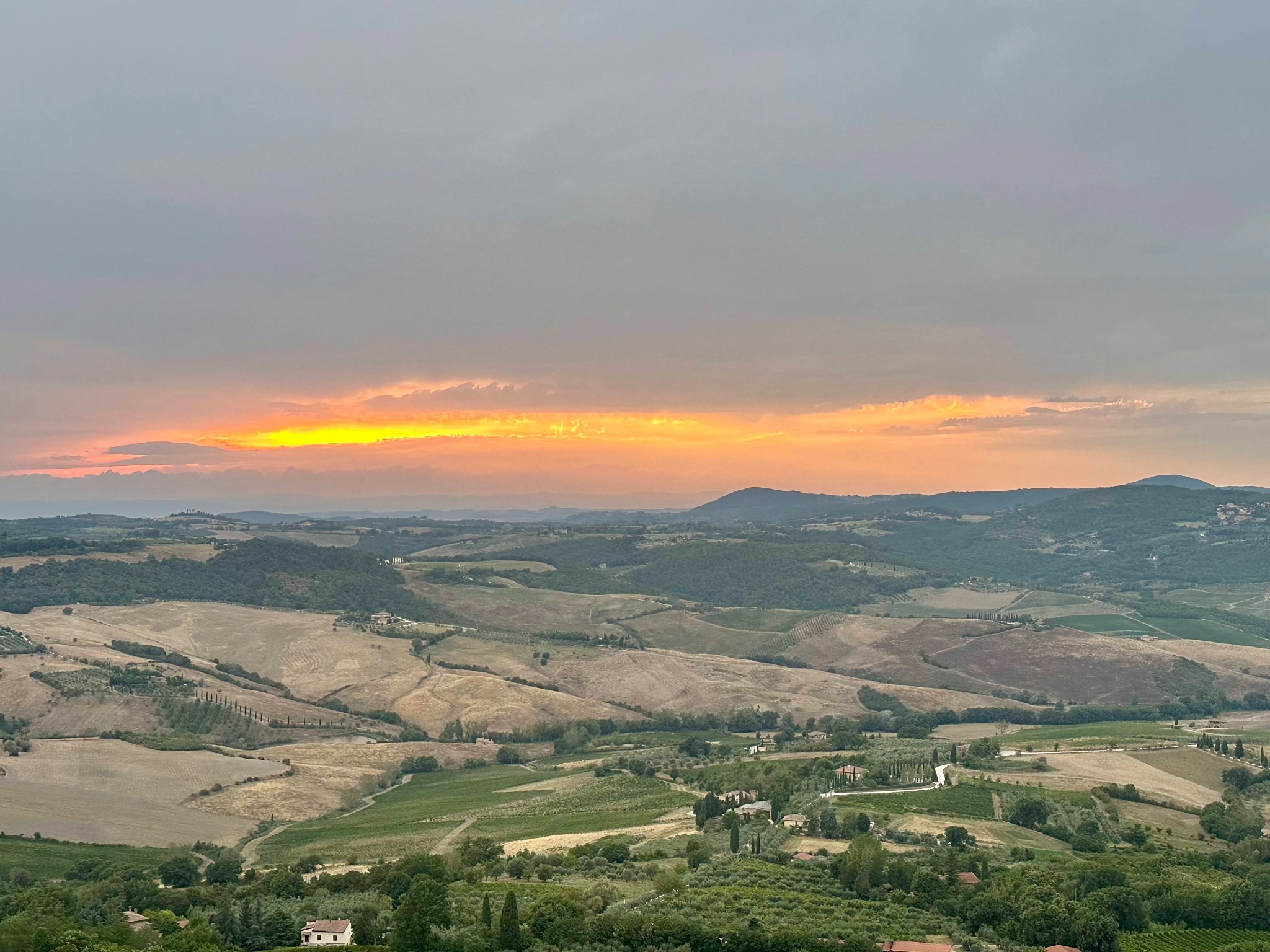
In Tuscany, I felt more present. I noticed the light. I looked farther into the distance. I allowed a meal, a walk, or a view to be enough. The experience reminded me that slowing down is not the same as doing nothing. It is giving ourselves enough time to truly receive what is happening.
Perhaps this is why I loved Tuscany so much. It brought together many things that matter to me: nature, history, beauty, food, and the quiet pleasure of simply being somewhere without needing to improve the moment.
I returned home, but Tuscany did not entirely remain behind. Sometimes it comes back when I sit outside with coffee, notice the flowers in my garden, linger over dinner, or stop to watch the evening sky. The lesson was not that life must always feel like a vacation. It was that ordinary life becomes richer when we give it the same attention we naturally give a beautiful journey.
What I brought home
I brought home photographs, of course. But I also brought home a desire to protect more spaciousness in my days.
To sit down when I drink my coffee. To choose fewer things and experience them more fully. To remember that old things need not be discarded simply because they are imperfect. To let a meal become a gathering, a walk become an experience, and a sunset become a reason to pause.
Tuscany taught me that history is not only something we study. It can be felt in a wall warmed by centuries of sun, in a vineyard tended across generations, and in a town that continues to live within its ancient shape.
Most of all, it reminded me that beauty does not always ask us to do more.
Sometimes it asks us to stay a little longer.
Some journeys end when we return home. Others quietly change the way we live there.